Painting with Time: Notes from a Fresco Workshop in Florence
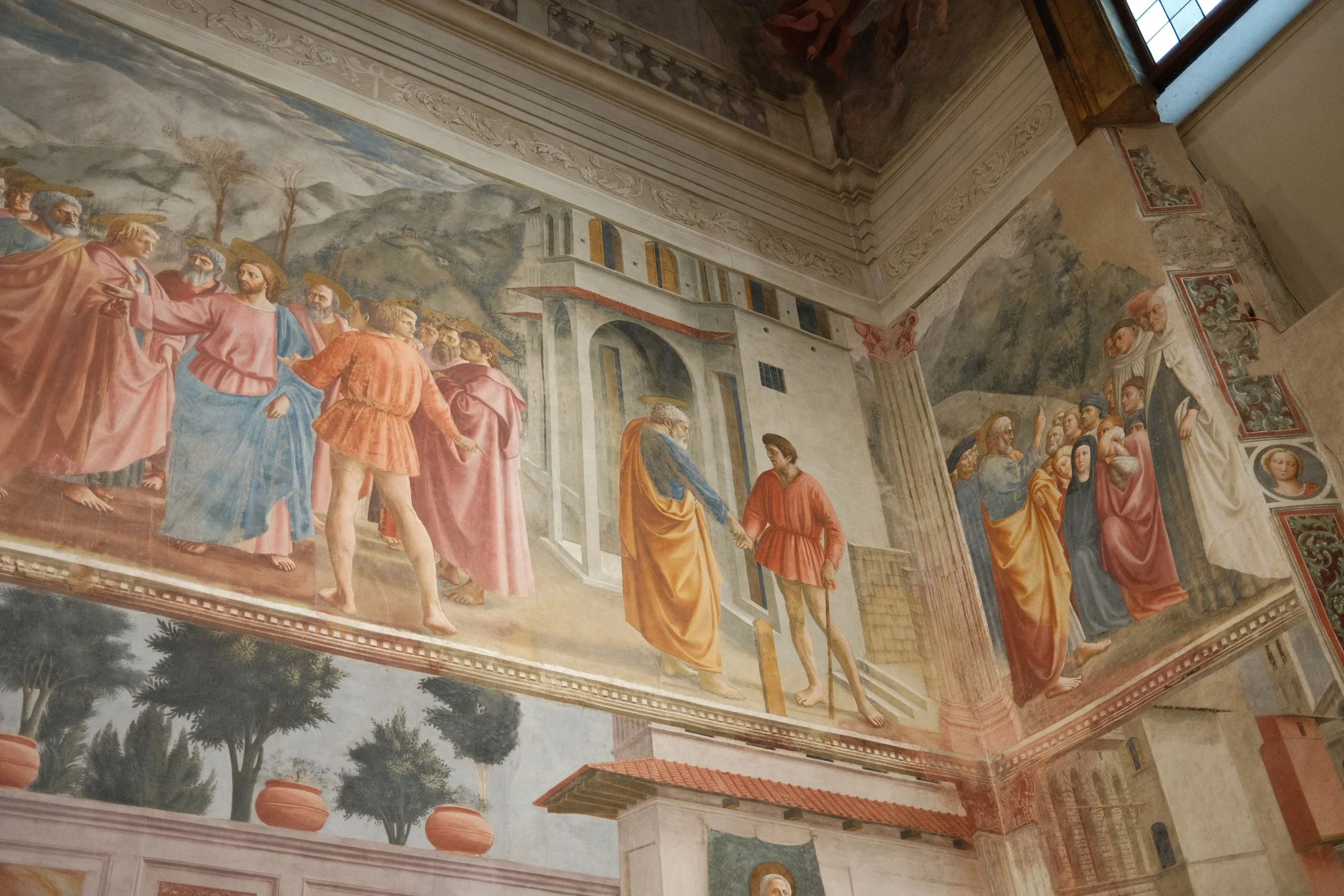
Cappella Brancacci, Florence, Italy.
A true fresco (buon fresco) is painted with pure pigments on fresh, wet lime plaster. As the plaster dries, the pigment becomes chemically bound into the wall itself. There is no revision, no layering later. What is painted must be placed with attention—and then released.
During the Renaissance, fresco was not simply a technique. It was a discipline shaped by time. Painters worked in giornate, daily sections of plaster, accepting limits as part of the process. The wall decided as much as the hand.
In Florence, I spent days looking closely at fresco—not as images, but as presences embedded in architecture.
At Cappella Brancacci, the figures carry weight and gravity. They stand firmly in space, human and restrained.
At Santa Croce, fresco unfolds across vast walls, softened by centuries, inseparable from silence and scale.
At San Marco, the works of Fra Angelico feel inward and contemplative—painted not to impress, but to accompany daily life.
At Palazzo Strozzi, another part of major Fra Angelico’s exhibition showed the fascinating egg temper and gilding techniques.
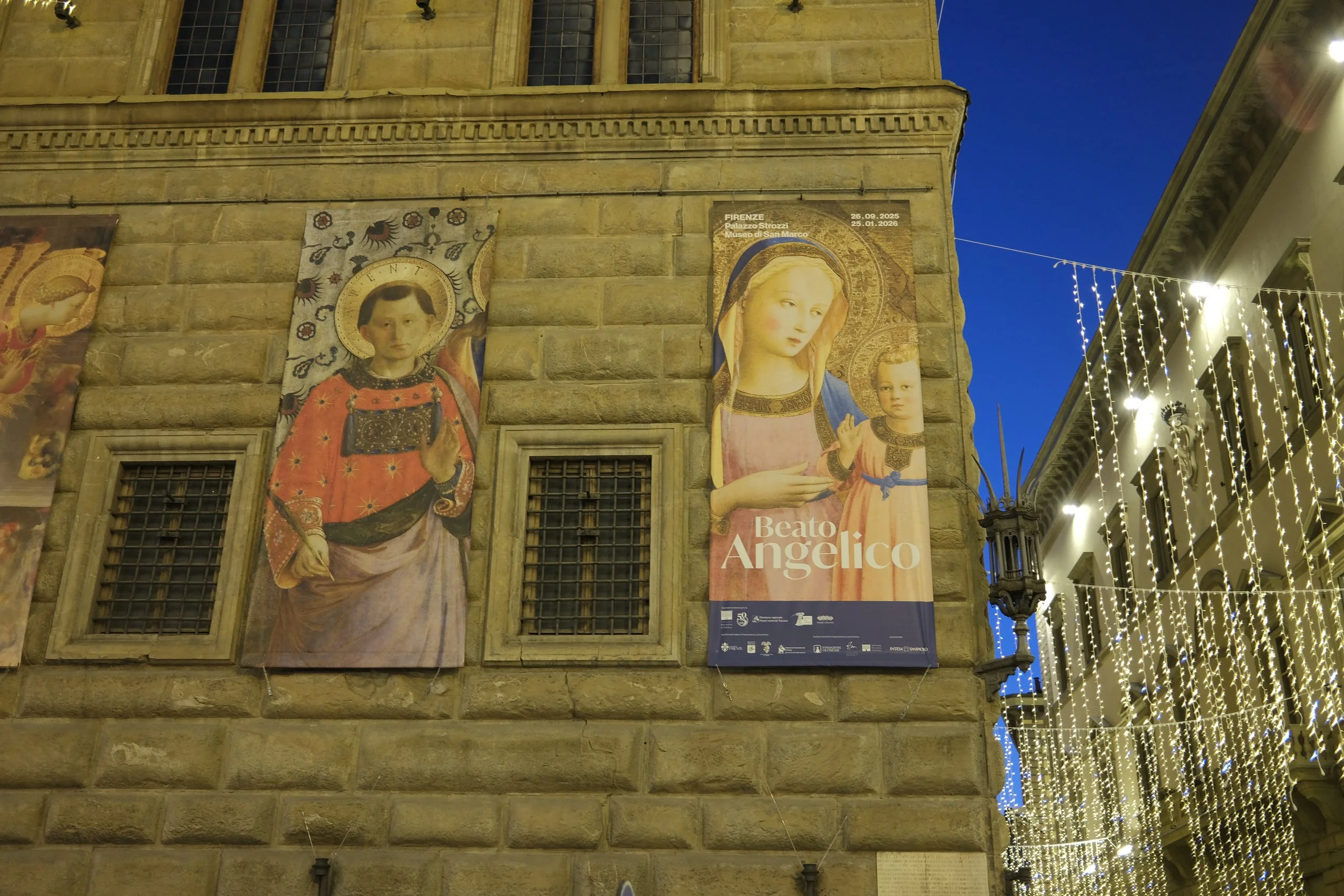
Fra Angelico’s exhibition at Palazzo Strozzi.
In the workshop, practice brought everything into focus.
Mixing lime plaster taught me humility. The surface sets on its own terms.
Pigments looked pale at first, deepening only with time—asking for trust.
For my study, I copied a detail after Fra Angelico. Not to replicate beauty, but to understand restraint. How little is needed. How quietly a form can exist. Fresco does not reward control. It asks for presence.
Whether or not fresco becomes part of my long-term practice, it has altered how I think about painting. It reminded me that making art can be an act of staying—within limits, within time, within attention.
Painting, as a way to remain.